
C A B I N F E V E R
C A B I N F E V E R
Rain, rain, rain, rain, rain, rain, rain, rain, rain, rain, rain, rain, rain, rain,
rain, rain, rain, rain, rain, rain, rain, rain, rain, rain, rain, rain, rain, rain,
rain, rain, rain, rain, rain, rain, rain, rain, rain, rain, rain, rain, rain, rain,
rain, rain, rain, rain, rain, rain, rain, rain, rain.
Wind, wind, wind, wind, wind, wind, wind, wind, wind, wind, wind, wind,
wind, wind, wind, wind, wind, wind, wind, wind, wind, wind, wind, wind,
wind, wind, wind, wind, wind, wind, wind, wind, wind, wind, wind, wind,
wind, wind, wind, wind, wind, wind, wind, wind, wind, wind.
Rain, rain, rain, rain, rain, rain, rain, rain, rain, rain, rain, rain, rain, rain,
rain, rain, rain, rain, rain, rain, rain, rain, rain, rain, rain, rain, rain, rain,
rain, rain, rain, rain, rain, rain, rain, rain, rain, rain, rain, rain, rain, rain,
rain, rain, rain, rain, rain, rain, rain, rain, rain.
Sun!
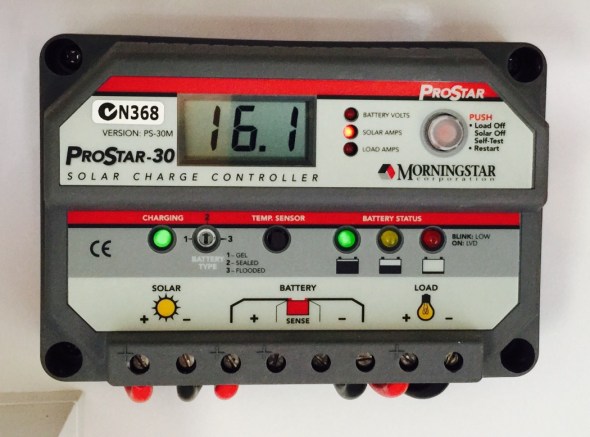
High score for Amps. I think it has a max of about 18A
C A B I N F E V E R Tech Talk:
We have 390 (3 x 130) Watts of solar panels bolted on the roof of the van.
Volts x Amps = Watts
But this is calculated at the solar panel rating, not our battery level. Under ideal conditions (full sun) the solar panels can run at about 21.5 Volts & produce 18.14 Amps, so
21.5V x 18.4A = 390 Watts
We have a “Value” (less than optimum) PWM (Pulse Width Modulation) style solar controller that are pretty common in the market place but they are not as efficient as the newer, more expensive, more efficient, MPPT( Maximum Power Point Tracking) controllers.
Google both the above to spend hours finding out why MPPT is so much better than PWM.
For us, the older PWM controller makes the panels operate at just above the charge voltage. This can range from around 11-14 Volts.
So on a day like today with full sun we are getting 16.1 Amps from the panels as per the image above. How good is that? Or is it?
Here’s where it gets interesting.
If our battery is a bit flat, say down at 11.4V then the 16.1A results in a feed of about (11.4V x 16.1A) 183 Watts.
If our battery is nearly fully charged on around 13.7V then the 16.1A results in a feed of about (13.7V x 16.1A) 220 Watts.
Under ideal conditions & if all the planets were aligned, actually, if just the sun was straight overhead on a high UV day, the maximum amps we would get from the solar panels as per their specification would be 18.14 Amps
So, if our battery is nearly fully charged on 13.7V then the 18.14A results in a feed of about (13.7V x 18.14A) 248 Watts to the batteries.
So given today we are getting 16.1 Amps, if our batteries are pretty flat and we need as much charge as possible we can only get about 183 Watts out of the solar panels. When the batteries are almost fully charged this increases to 220 Watts. And the absolutely best case will produce 248 Watts.
390 Watts – 248 Watts = 142 Watts wasted…
An MPPT controller is able to use the extra 142 Watts so you get the full 390 Watts that the panels are rated at.
Welcome to the world of Solar Power!
Maybe we’ll buy a wind turbine & bolt it to the top of the car as they seem pretty popular down here.
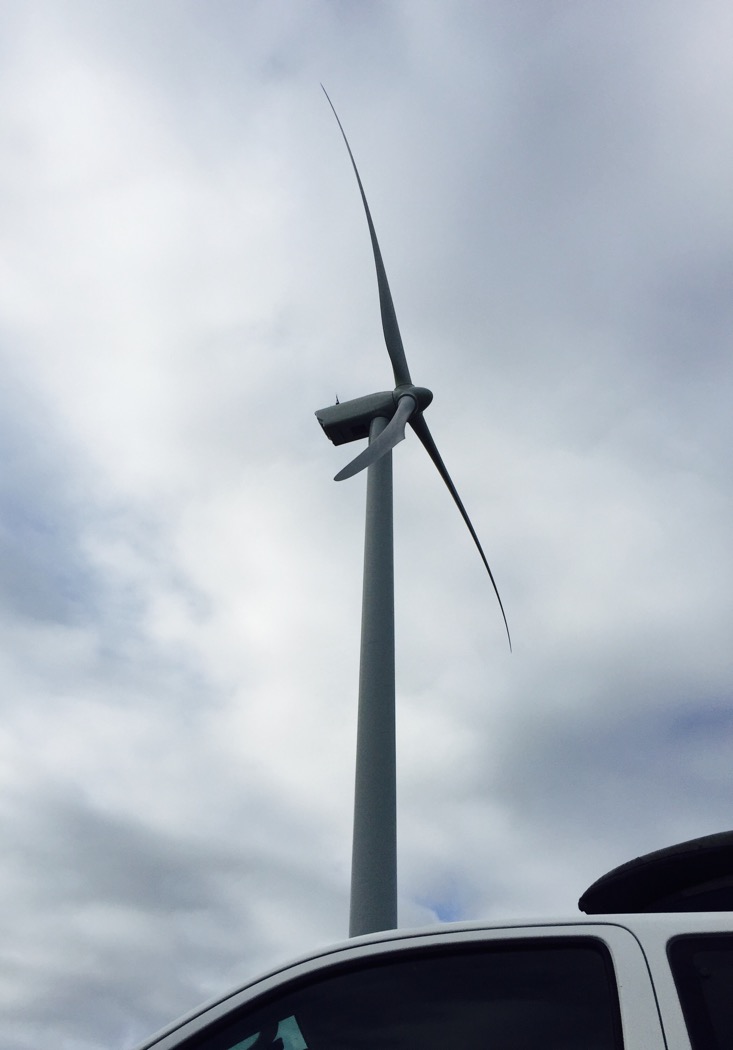
Vehicle mounted 3 MegaWatt turbine?
Wind, wind, wind, wind, wind, wind, wind, wind, wind, wind, wind, wind,
wind, wind, wind, wind, wind, wind, wind, wind, wind, wind, wind, wind,
wind, wind, wind, wind, wind, wind, wind, wind, wind, wind, wind, wind,
wind, wind, wind, wind, wind, wind, wind, wind, wind, wind.
Looks like we may get waves & calm conditions for tomorrow. Just a maybe….

Waves, but strong on/cross-shore winds
 VanExtraOrdinaire.com
Think you should go to the PUB and forget about the WATTS!!
Time to come home and hang with us in Sunny Bar Beach xoxoxox